


Sake Education
Brewing Differences
Most people have a rough idea of how beer and wine are made. Grain goes in, alcohol comes out. Grapes go in, wine comes out. Sake gets lumped in with both depending on who you ask, called a rice wine by some, compared to beer by others. The truth is that sake is neither, and the way it is brewed is unlike anything else in the beverage world. Here is what actually happens in each tank.
One vs Two Stages
Sake vs Beer
Beer and sake both start from grains, and neither grain contains sugar. Yeast needs sugar to produce alcohol, which means both beverages have to solve the same problem: how do you convert starch to sugar before fermentation can begin?
Beer solves it through malting. The barley is moistened and warmed until it sprouts, which triggers the grain to produce its own enzymes.
Those enzymes convert the starch to sugar in a process called saccharification, and then yeast is added to convert that sugar to alcohol. Two stages, happening one after the other. Sequential.
Sake solves it differently. Because the rice husks have been removed during milling, the rice cannot be malted. Instead, a mold called koji-kin is grown on a portion of the steamed rice, producing the enzymes that do the same job. But here is where sake does something no other beverage does: those enzymes convert starch to sugar at the exact same time that yeast is converting sugar to alcohol, all in the same tank. This is called multiple parallel fermentation, or .
| Category |  Sake Sake |  Beer Beer |
|---|---|---|
 Base Ingredient Base Ingredient | Rice | Barley |
 Starch-to-Sugar Method Starch-to-Sugar Method | Koji-kin | Malting |
 Brew Type Brew Type | Multiple parallel fermentation | Saccharification then fermentation |
 Brew Time Brew Time | 2–3 months | 1–4 weeks |
 ABV Range ABV Range | 13–21% | 4–8% |
Figure 1: Beer sequences starch-to-sugar and sugar-to-alcohol. Sake runs them simultaneously, in the same tank, for up to thirty-five days.
The result of this difference shows up in the glass. Beer typically ferments in one to four weeks and lands between 4% and 8% alcohol by volume (ABV). Sake ferments for roughly two to three months and can reach anywhere from 13% to 21% ABV, without distillation, which is remarkable for a brewed beverage.
Complex vs Simple
Sake vs Wine
Wine has it comparatively easy. Grapes contain their own natural sugars, which means winemaking skips the starch-to-sugar problem entirely. Crush the grapes, add yeast, and fermentation begins almost immediately. The yeast converts the grape sugars directly to alcohol in a single, straightforward fermentation that typically takes one to four weeks. That simplicity is part of what makes wine so ancient and so widespread.
Sake has no such shortcut. Where wine needs nothing more than crushed fruit and yeast, sake requires a two-day koji-making process, a two-week yeast starter, and a three-stage ingredient addition before main fermentation even begins. From start to finish, brewing a single batch takes roughly sixty to ninety days. Wine typically finishes between 11% and 14% ABV, driven entirely by the natural sugar content of the grapes. Sake reaches 13% to 21% ABV from a grain that starts with no sugar at all.
| Category | Sake |  Wine Wine |
|---|---|---|
| Base Ingredient | Rice | Grapes |
| Starch-to-Sugar Method | Koji-kin | None needed |
| Brew Type | Multiple parallel fermentation | Single fermentation |
| Brew Time | 2–3 months | 1–4 weeks |
| ABV Range | 13–21% | 11–14% |
Figure 2: The “none needed” in row two is the most important cell in this entire table.
Sake’s Korean Cousin
Sake vs Makgeolli
Makgeolli is Korea’s oldest alcoholic beverage, brewed from rice and water using a fermentation starter called nuruk. Nuruk is a dried cake made from wheat or rice that contains a wild mix of molds, yeasts, and bacteria all working together. It is a less controlled, more rustic approach to the same fundamental problem: how do you convert rice starch to sugar so that fermentation can begin.
Like sake, makgeolli uses multiple parallel fermentation, but where most sake is pressed and filtered to produce a clear or lightly cloudy liquid, makgeolli is strained through a coarse mesh and served with its rice solids still present, giving it that distinctive milky, slightly fizzy appearance. It is closest in spirit to a nigori, though a bit more rustic in character.
| Category | Sake | Makgeolli |
|---|---|---|
| Base Ingredient | Rice | Rice |
| Starch-to-Sugar Method | Koji-kin | Nuruk |
| Brew Type | Multiple parallel fermentation | Multiple parallel fermentation |
| Brew Time | 2–3 months | 7–14 days |
| ABV Range | 13–21% | 6–9% |
Figure 3: Same base ingredient, same fermentation type, completely different levels of complexity and outcome.
The two beverages share a common ancestor in the ancient tradition of rice fermentation across Asia, and tasting them side by side reveals both how similar and how different that tradition can be.
Let’s Eliminate Some Confusion
Distilled, Not Just Brewed
Sake, beer, wine, and makgeolli are all brewed, but the beverages below start from a similar fermented base but go one step further, through distillation.
Distillation heats a fermented liquid until the alcohol vaporizes, then captures and cools that vapor into a concentrated spirit. All three have a rice or grain connection that sometimes causes confusion with sake, but they belong to a different category entirely.
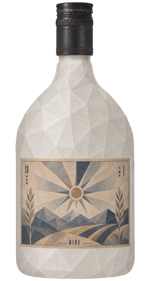
Shochu
A Japanese distilled spirit made from rice, barley, sweet potato, or buckwheat. Uses koji in its fermentation process, which is the sake connection. Typically 25% to 35% ABV. Distilled, not brewed.
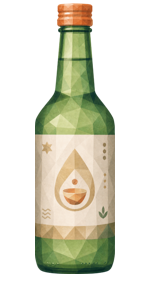
Soju
Korea’s most famous spirit, traditionally distilled from rice or grain, though most modern versions use tapioca-derived ethanol. The world’s best-selling spirit by volume. Typically 16% to 25% ABV. Distilled, not brewed.
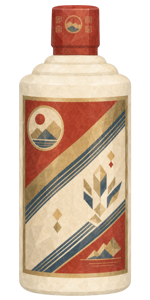
Baijiu
China’s national spirit, distilled from sorghum or rice using a koji-like fermentation starter called qu. The world’s most consumed spirit overall. Intensely aromatic and typically 40% to 60% ABV. Distilled, not brewed.
In Conclusion
All Celebrated, One Favorite
Beer, wine, makgeolli, and sake are all remarkable beverages, and of course we have our favorite.
Sake’s brewing process, cultivating a mold, nurturing a two-week yeast starter, adding ingredients in three careful stages, and fermenting for up to thirty-five days, does set it apart. But there is something to love and respect about every one of these celebrated beverages.

Sake Education
Sake Certifications
SEC, WSET, SSA, SSI. A tour of the sake certifications worth knowing about and who each one is for.
About This Post
Date Published: Fall 2026
Category: Sake Homebrewing
External Resources We Like: Daichi Takemoto over at Kanpai Navi has a thorough article on if sake is a wine, beer, or spirit.
