


Serving & Enjoyment
Sake Vessels
The vessel you choose changes the sake in your hand. Not dramatically or chemically, but in the atmosphere you're creating when you are actually sitting down for a drink. The weight of the cup as you hold it, the texture against your lips, the rim as it captures aromas and focuses them, the act of warming a flask, the pitcher passing across the table, all of it shapes the experience in ways that go beyond what is in the bottle.
This is a guide to the most common sake vessels you will encounter, organized simply: what holds the sake, and what brings it to your lips.
Petite, Soulful, Ceremonial
Drinking Vessels
Sake drinking vessels range from the tiny and ceremonial to the large and personal. Some are built for sharing, some for solitude, some for formal occasions, and some for a quiet Friday evening. Knowing the difference helps you reach for the right one, and part of the pleasure of getting into sake is building a small collection of vessels that feel like yours. We are already well past two dozen and the collection shows no signs of stopping.
The Petite O-choko
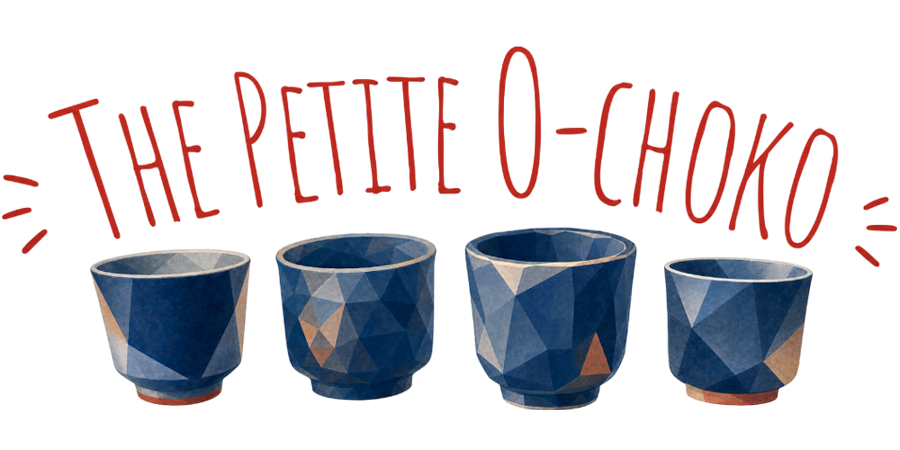
The is the small sake cup, the one most people picture when they think of sake service. Handleless, typically ceramic, and holding just enough for a few sips before it needs a refill. That is not a limitation. It is the whole point. Small cups mean frequent pours, and frequent pours mean more opportunities to pay attention to the person across from you.
O-choko come in an enormous range of styles, from simple white porcelain to elaborately glazed studio pottery. The rim thickness matters more than most people realize. A thin rim gets out of the way. A thick rim announces itself before the sake does. And either is fine, depending on the experience you want.
The Soulful Guinomi

The is the o-choko's more relaxed older sibling. Larger, more casual, and deeply personal, it holds two to three times as much as a standard o-choko and is meant for slower, more contemplative drinking rather than the back-and-forth of shared service.
Where o-choko tends toward uniformity, guinomi tends toward individuality. They are frequently handmade by potters, and serious sake drinkers often collect them the way wine enthusiasts collect glasses. Shape, glaze, weight, and texture vary wildly from one to the next, and finding a guinomi that feels right in your hand is one of the quiet pleasures of getting into sake.
The Boxy Masu
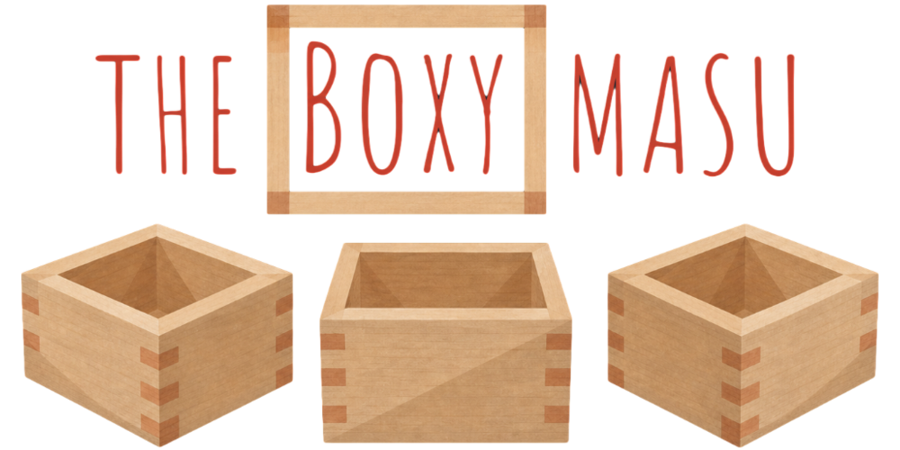
The is a wooden box that is also a cup, carrying more history than almost any other vessel on this list. Originally a measuring tool for rice and grain, it holds exactly one , 180ml, and sake is sipped directly from one corner rather than from the rim.
Traditional masu are made from hinoki cypress or sugi cedar, both of which impart a subtle woody character to the sake. When sake was richer, that cedar note was barely noticeable. Modern sake is lighter and can be dominated by it, which is why the masu has become more ceremonial than everyday. Some bars will set a glass inside the masu and overfill it, letting sake spill in as a sign of generosity. Both get drunk.
The Sacred Sakazuki
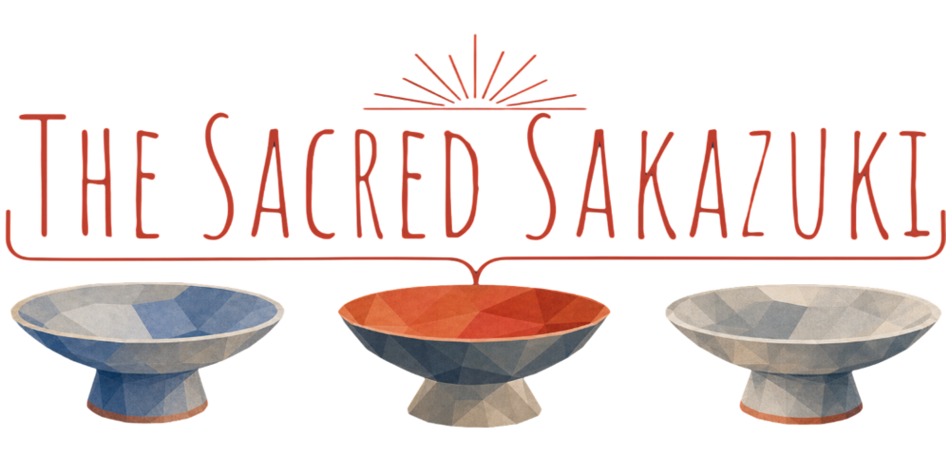
The is the oldest and most ceremonially significant sake vessel, a flat, wide, shallow cup that holds just enough sake to matter. Where the o-choko is practical and the guinomi is personal, the sakazuki is ritual. It appears at weddings and formal ceremonies, where sake is being shared as a symbol of something larger than the drink itself.
You are unlikely to reach for a sakazuki on an ordinary Friday evening, and that is appropriate. It is not an everyday vessel. But understanding what it represents gives you a better sense of how deeply sake is woven into Japanese ceremonial life, and why pouring for someone else carries the weight that it does.
The Precise Kikichoko
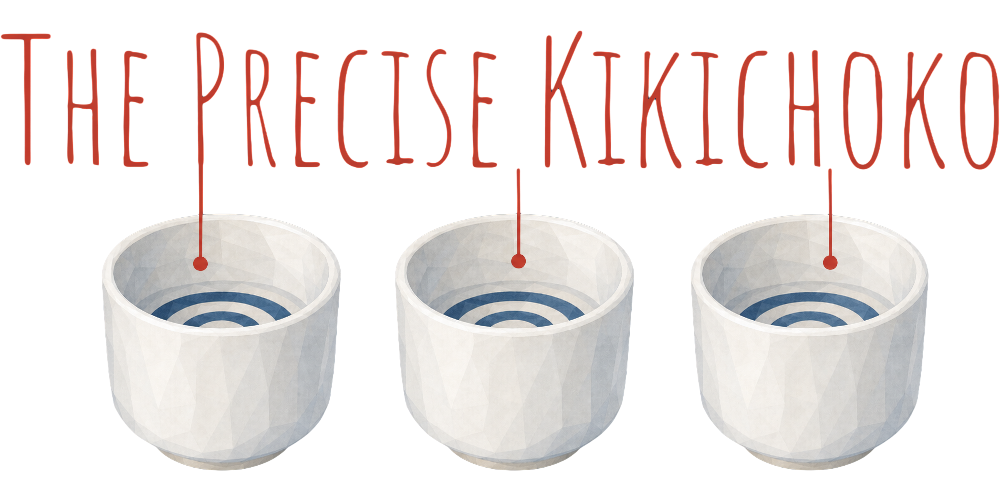
The is the professional tasting cup, the one you will see at sake competitions, brewery visits, and in the hands of assessing their own work. It is small, white, porcelain, and almost aggressively plain by design. Two concentric blue rings sit at the bottom of the interior, and they are not decorative. They are functional. The contrast between the white porcelain and the blue rings makes it easy to assess the color and clarity of the sake against a known reference point.
It holds exactly one go, 180ml, same as a masu, and the shape is designed to concentrate aromas toward the nose rather than let them dissipate. Thin rim, slight taper toward the top, no glaze on the interior that might interfere with color assessment.
You do not need a kikichoko to enjoy sake. But if you are starting to take tasting seriously, drinking from one occasionally is a useful exercise. It strips away the atmosphere and asks you to pay attention to what is actually in the glass.
Iconic, Open, Thermal
Pouring Vessels
If the drinking vessel is the destination, the serving vessel is the journey. The tokkuri, the katakuchi, and the chirori each move sake from the bottle to the cup in their own way, and each one brings something different to the table beyond simple function. One warms, one pours, one conducts heat with more precision than ceramic ever could. Knowing which one to reach for changes how the sake arrives and what the moment feels like.
The Iconic Tokkuri

The is the flask, the vessel you have almost certainly encountered at a Japanese restaurant, arriving at the table already filled and ready to pour from. Its narrow neck slows the pour, its ceramic body retains heat when warmed, and its shape makes it easy to hold and pass. Most tokkuri hold one to two go, enough for a small shared pour. To warm sake in a tokkuri, place it in water that has just come off the boil and is no longer actively boiling, checking every thirty seconds or so. Never, ever boil sake directly.
The Open Katakuchi

The is a small open-topped pitcher with a single spout that brings a different energy to the table than a tokkuri. Where the tokkuri is about the exchange between two people, the katakuchi is about access. It sits on the table and invites people to pour freely. Best for room temperature or chilled sake, and since the top is open, pour relatively quickly. The sake is exposed to air and quietly oxidizing from the moment it goes in.
The Thermal Chirori

The is the serious warm sake vessel, a small metal pitcher, traditionally tin or copper, with a handle and a spout. Where a tokkuri warms sake slowly, a chirori conducts heat faster and with more precision, making it the better choice when you are trying to hit a specific temperature. Less common than the tokkuri but worth knowing if warm sake becomes a regular part of how you drink.
No Wrong Answers
Choose Your Vessel
There is no wrong vessel for sake, only better and worse fits for the moment. A cold in a thin-rimmed glass. A warm in a heavy guinomi. A shared tokkuri between two people who are paying attention to each other. A sakazuki at a moment that deserves one.
Part of getting into sake is getting into the vessels that carry it. The collection has a way of growing on its own, one cup at a time, until you find yourself reaching for a specific guinomi on a specific kind of evening without quite knowing when that became a habit. That is a good sign.
If you are curious about what makes sake different from every other beverage in your glass, that is a good place to go next.

Sake Homebrewing
Brewing Differences
Sake isn't beer, wine, or rice wine. Here is what actually happens in each tank.
About This Post
Date Published: Fall 2026
Category: Sake Education
External Resources We Like: The Japan Sake and Shochu Makers Association goes deep into famous sake cup materials and designs—their guide to sake cups and vessels is an all-around great site worth exploring.
